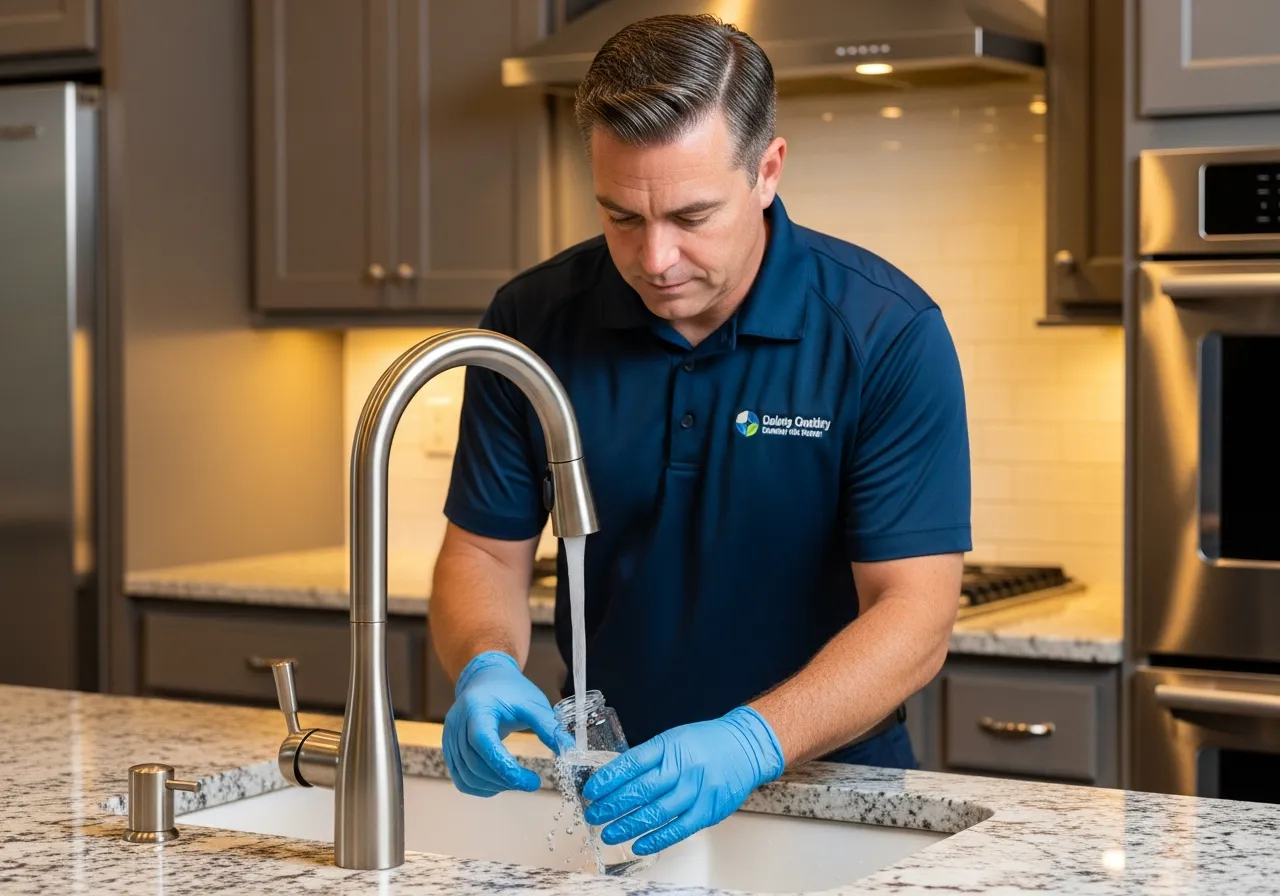
Are you concerned about what is in your drinking water? Whether your Fort Worth area home relies on municipal supply or a private well, water quality problems often go undetected until they affect your family's health. Discolored water, unusual taste or odor, recurring gastrointestinal issues, and staining on fixtures can all signal contamination. Our team provides certified water quality testing that goes far beyond basic screening — we analyze for bacteria, heavy metals, volatile organic compounds, nitrates, pesticides, and dozens of additional contaminants using accredited laboratory methods. Private well owners face particular risk because Texas does not require ongoing well water testing after initial construction, leaving homeowners responsible for monitoring their own supply. Municipal water can also develop problems from aging infrastructure, lead service lines, and cross-contamination events. Call 940-240-6902 to schedule your water quality assessment today.
What Is Water Quality Testing?
Water quality testing collects samples from your home's water supply for accredited laboratory analysis, screening for bacteria, lead, nitrates, pesticides, and 50+ contaminants against EPA drinking water standards to ensure your family's water is safe.
Water quality testing is the process of collecting water samples from your home's taps, well heads, or water treatment systems and submitting them to an accredited laboratory for analysis against EPA drinking water standards and health advisory levels. Testing identifies biological contaminants (coliform bacteria, E. coli), inorganic chemicals (lead, arsenic, copper, nitrates, fluoride), organic chemicals (pesticides, herbicides, volatile organic compounds), and physical parameters (pH, hardness, total dissolved solids, turbidity). For private well owners, testing is especially critical because wells are not regulated by the EPA Safe Drinking Water Act after initial construction — the homeowner is solely responsible for ensuring water safety. Municipal water users may also need testing to identify problems introduced by aging pipes, lead solder joints, or local contamination events that occur after water leaves the treatment plant.
Water Quality Testing Process: How We Work
1
Consultation & Risk Assessment
We discuss your concerns, water source (municipal or well), home age, plumbing type, and any symptoms you have noticed. This helps us select the right testing panel and identify potential contamination sources.
2
First-Draw Sample Collection
For lead and copper testing, we collect a first-draw sample from water that has sat in pipes for 6+ hours (typically first thing in the morning). This captures the highest concentration of metals leaching from pipes and solder joints.
3
Flushed Sample Collection
A second sample is collected after running the water for 2-3 minutes to represent the quality of water from your main supply line or well. This helps distinguish between plumbing-related contamination and source water issues.
4
Well Head Inspection
For private well systems, we inspect the well head, casing, cap, and surrounding area for potential contamination pathways such as cracked casings, missing caps, nearby septic systems, or surface water drainage toward the well.
5
Sample Preservation & Chain of Custody
Samples are preserved according to EPA methods — some require ice, others need chemical preservatives. Each sample is labeled, documented, and sealed with formal chain of custody paperwork for the laboratory.
6
Accredited Laboratory Analysis
Samples are analyzed at a certified laboratory using EPA-approved methods. Standard panels test for 50+ parameters including bacteria, metals, nitrates, pH, hardness, and organic compounds. Results are compared against EPA Maximum Contaminant Levels (MCLs).
7
Results Report & Recommendations
You receive a detailed report showing each parameter tested, the detected level, the EPA standard, and whether it passed or failed. We include plain-language explanations and specific recommendations for any contaminants found above safe levels.
✓
Independent & unbiased results. Our certified inspectors test your water with no ties to water treatment companies. Our team serves 31 DFW cities with accredited lab analysis for both municipal and well water systems.
Our Water Quality Testing Options
Basic Drinking Water Panel
Tests for the most common and dangerous contaminants: coliform bacteria, E. coli, lead, nitrates, pH, and total dissolved solids. Meets minimum recommended testing for all home water supplies.
Best for: Annual maintenance testing for municipal water users and routine well water screening to catch the most critical health-related contaminants.
Comprehensive Water Analysis
Extended panel covering 50+ parameters including heavy metals (lead, arsenic, copper, mercury), nitrates/nitrites, volatile organic compounds, pesticides, hardness minerals, iron, manganese, sulfate, and fluoride.
Best for: First-time well testing, real estate transactions, homes with known water quality issues, or anyone who wants a complete picture of their water composition.
Well Water Testing
Specialized panel designed for private well systems including bacteria (total coliform, E. coli), nitrates, pH, total dissolved solids, iron, manganese, hardness, and common agricultural contaminants prevalent in North Texas groundwater.
Best for: Private well owners in rural Tarrant, Parker, Johnson, and Wise County areas who rely on groundwater as their primary drinking water source.
Lead & Copper Testing
Focused testing for lead and copper levels using EPA-recommended first-draw and flushed sampling protocols. Critical for homes with older plumbing, lead solder joints, or brass fixtures manufactured before 2014.
Best for: Homes built before 1986 (when lead solder was banned), families with young children, and properties with known older plumbing systems.
Benefits of Professional Water Quality Testing
Protects Your Family's Health
Many water contaminants are tasteless and odorless — lead, nitrates, bacteria, and VOCs can be present without any visible signs. Testing is the only way to confirm your water is safe to drink.
Identifies Hidden Contaminants
Lab analysis detects contaminants at parts-per-billion levels that home test kits cannot measure. Professional testing provides accurate, legally defensible results.
Essential for Well Owners
Texas does not require ongoing testing of private wells after construction. Without regular professional testing, well water contamination can go undetected for years, exposing your family to bacteria, nitrates, or agricultural chemicals.
Reveals Plumbing-Related Issues
First-draw testing identifies lead, copper, and other metals leaching from your home's pipes, solder joints, and fixtures — contamination that occurs after water leaves the treatment plant or well.
Supports Real Estate Transactions
Certified water quality reports are essential for buying or selling homes with private wells. Testing protects buyers from unknown contamination and gives sellers documentation of safe water quality.
Guides Treatment Solutions
If contaminants are found, your detailed lab report identifies exactly which treatment system you need — whether it is a point-of-use filter, whole-house system, water softener, UV disinfection, or reverse osmosis unit.
Why Choose Mold Testing Fort Worth for Water Quality Testing?
- Our inspectors are trained in EPA water sampling protocols including proper first-draw procedures, sample preservation, and chain of custody documentation
- All samples are analyzed at certified laboratories using EPA-approved methods with results compared against federal Maximum Contaminant Levels
- We test both municipal and private well water systems throughout the Fort Worth metro area, including rural properties in surrounding counties
- Detailed reports include plain-language explanations of every parameter tested, not just raw numbers — you will understand exactly what is in your water
- As an independent testing company, we have no affiliation with water treatment companies — our results are unbiased with no incentive to sell you filtration products
Water Quality Testing Serving Fort Worth Communities
We provide professional water quality testing throughout Fort Worth and surrounding communities including Arlington, Keller, Southlake, Grapevine, Mansfield, North Richland Hills, Burleson, Bedford, Colleyville, and Grand Prairie. View all 31 service areas.
What Affects Water Quality Testing Cost in Fort Worth?
Testing Panel Selected
Basic bacteria and lead screening costs less than comprehensive 50+ parameter analysis. The right panel depends on your water source, concerns, and whether this is routine monitoring or diagnostic testing.
Number of Sample Points
Testing a single kitchen tap costs less than sampling multiple locations (kitchen, bathroom, outdoor spigot, well head). Multi-point sampling identifies whether contamination is source-wide or localized to specific plumbing runs.
Water Source Type
Private well testing may include well head inspection and agricultural contaminant panels not needed for municipal water. Well systems often require more parameters to establish a complete safety profile.
Laboratory Turnaround
Standard results are available within 5-7 business days. Rush processing is available for urgent situations such as real estate closings or suspected bacterial contamination.
Specialized Parameters
Additional testing for radon in water, PFAS (forever chemicals), or pharmaceutical compounds requires specialized analytical methods at additional cost.
Our mold testing services start at $600 (includes 2 samples, moisture inspection & full report; +$0.10/sq ft for homes over 2,500 sq ft). Call 940-240-6902 or get your free quote online — most appointments scheduled within 24-48 hours.
Frequently Asked Questions About Water Quality Testing
How much does water quality testing cost in Fort Worth?
Water quality testing costs vary based on the panel selected and number of sample points. Basic bacteria and lead screening starts at an affordable price point, while comprehensive 50+ parameter analysis costs more. Contact us at 940-240-6902 for a personalized quote based on your specific water source and concerns.
How often should I test my well water?
The EPA recommends testing private well water at least once per year for bacteria (total coliform, E. coli) and nitrates. Test more frequently if you notice changes in taste, color, or odor; after flooding or nearby construction; if anyone in the household becomes pregnant; or if nearby land use changes (new agricultural activity, construction, or septic system installation).
Is Fort Worth tap water safe to drink?
Fort Worth's municipal water meets EPA standards when it leaves the treatment plant. However, contamination can occur between the plant and your tap through aging infrastructure, lead service lines, lead solder in home plumbing, and cross-contamination events. Testing at your tap verifies what you are actually drinking, not just what leaves the treatment facility.
What contaminants are most common in North Texas water?
Common concerns in the Fort Worth area include lead (from older plumbing), nitrates (from agricultural runoff in surrounding counties), hardness minerals (calcium and magnesium from limestone geology), atrazine and other herbicides (from agricultural activity), and seasonal bacteria spikes in private wells after heavy rainfall events.
Do home water test kits work?
Consumer test kits provide only rough screening with limited accuracy. They cannot detect contaminants at the low levels that matter for health, often produce false negatives for bacteria, and cannot identify specific contaminant species. Professional laboratory testing uses EPA-approved methods with quality controls that produce accurate, legally defensible results.
Should I test my water before buying a home?
Absolutely, especially if the home has a private well. Water quality testing should be part of every home inspection. For well properties, bacterial and chemical contamination can be expensive to remediate and may indicate broader groundwater issues. Even for municipal water homes, testing reveals plumbing-related lead or copper contamination specific to that property.
What should I do if my water test shows contamination?
Your report will identify exactly which contaminants exceeded safe levels and by how much. For bacterial contamination, immediate action (boiling water, shock chlorination for wells) may be needed. For chemical contaminants, we recommend appropriate treatment systems based on your specific results. As an independent testing company, we provide unbiased treatment recommendations.
Can water quality affect mold growth in my home?
Yes. Water leaks, high humidity from plumbing issues, and condensation from hard water deposits can all contribute to mold growth. If you are experiencing both water quality concerns and potential mold issues, we can test for both during a single visit, saving you time and providing comprehensive environmental data about your property.
Helpful Mold Testing Articles
Learn more about water quality testing and mold prevention from our expert guides:
Browse all articles for more mold testing tips and guidance.
Trusted Mold Safety Resources
For additional information about mold health risks and testing standards, we recommend these authoritative resources:
Concerned About Your Drinking Water?
Do not guess about what is in your water. Whether you rely on Fort Worth municipal supply or a private well, our certified testing provides accurate, lab-verified answers about your water quality. With same-week appointments and detailed reporting, you will know exactly what is in every glass your family drinks.
Starting at $600 — 2 samples, moisture inspection & full report included
Related Services
Water Quality Testing — Cities We Serve
Our certified inspectors provide water quality testing across Fort Worth and the surrounding DFW Metroplex. Select your city for local pricing, scheduling, and service details:
Don't see your city? Call 940-240-6902 — we serve all of Tarrant County and neighboring areas.
Home > Services > Water Quality Testing